

 |
 |
 |
 |
|||||||||||||||||||||||||||||||||||||||||||||||||||||||||||||||||||||||||||||||||||||||||||||||
 |
||||||||||||||||||||||||||||||||||||||||||||||||||||||||||||||||||||||||||||||||||||||||||||||||||
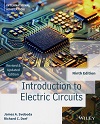 |
Introduction to Electric Circuits 9/e IA, Revised and Updated+作者:
Svoboda/Dorf+年份:
2025 年9 版
+ISBN:
9781394394319
+書號:
EE0537PC
+規格:
平裝/套色
+頁數:
912
+出版商:
John Wiley
+參考資訊:


|
定價
$ |


|
本站購物功能已關閉,點選"購物車"圖示會自動連結到新的購書網頁!或與LINE客服諮詢聯繫
讀者購書請至★滄海書局‧鼎隆圖書購書網 ★https://eshop.tsanghai.com.tw/★
滄海ESHOP購書網提供更方便、快速訂購、結帳付款的購書服務,並提供數位產品購買專區~
書籍若有教學輔助配件,僅提供採用老師教學使用,是非賣品,不販售,亦無法提供一般讀者。
相關資源(如Errata、Data sets、Web chapters、Study Guide及其他等)請連結至本書「參考網址」的RELATED RESOURCES下載。

●Expanded use of problem-solving software PSpice and MATLAB.
●New problems and New examples have been added to the text.

●Presents a thorough overview of circuit theory and design that develops students’ ability to "think like an engineer."
●A vast collection of problems including basic analysis problems, compare and contrast problems, multipart problems, MATLAB and PSpice problems, and design problems.
●Each chapter concludes with a design example that uses a formal, five-step problem solving methodology.
●"How Can We Check" sections, teach students to assess their own work for correctness, and are included in each chapter.
●Illustrative examples demonstrate multiple approaches to solving similar problems.

James A. Svoboda is an associate professor of electrical and computer engineering at Clarkson University, where he teaches courses on topics such as circuits, electronics, and computer programming. He earned a PhD in electrical engineering from the University of Wisconsin at Madison, an MS from the University of Colorado, and a BS from General Motors Institute. Sophomore Circuits is one of Professor Svoboda's favorite courses. He has taught this course to 6,500 undergraduates at Clarkson University over the past 35 years. In 1986, he received Clarkson University's Distinguished Teaching Award.
Professor Svoboda has written several research papers describing the advantages of using nullors to model electric circuits for computer analysis. He is interested in the way technology affects engineering education and has developed several software packages for use in Sophomore Circuits.
Richard C. Dorf, professor of electrical and computer engineering at the University of California, Davis, teaches graduate and undergraduate courses in electrical engineering in the fields of circuits and control systems. He earned a PhD in electrical engineering from the U.S. Naval Postgraduate School, an MS from the University of Colorado, and a BS from Clarkson University. Highly concerned with the discipline of electrical engineering and its wide value to social and economic needs, he has written and lectured internationally on the contributions and advances in electrical engineering.
Professor Dorf has extensive experience with education and industry and is professionally active in the fields of robotics, automation, electric circuits, and communications. He has served as a visiting professor at the University of Edinburgh, Scotland, the Massachusetts Institute of Technology, Stanford University, and the University of California at Berkeley.
A Fellow of the Institute of Electrical and Electronic Engineers and the American Society for Engineering Education, Dr. Dorf is widely known to the profession for his Modern Control Systems, twelfth edition (Pearson, 2011) and The International Encyclopedia of Robotics (Wiley, 1988). Dr. Dorf is also the coauthor of Circuits, Devices and Systems (with Ralph Smith), fifth edition (Wiley, 1992). Dr. Dorf edited the widely used Electrical Engineering Handbook, third edition (CRC Press and IEEE press), published in 2011. He has also worked for Technology Ventures, fourth edition, (McGraw-Hill), published in 2013.

Chapter 1 Electric Circuit Variables
Chapter 2 Circuit Elements
Chapter 3 Resistive Circuits
Chapter 4 Methods of Analysis of Resistive Circuits
Chapter 5 Circuit Theorems
Chapter 6 The Operational Amplifier
Chapter 7 Energy Storage Elements
Chapter 8 The Complete Response of RL and RC Circuits
Chapter 9 The Complete Response of Circuits with Two Energy Storage Elements
Chapter 10 Sinusoidal Steady-State Analysis
Chapter 11 AC Steady-State Power
Chapter 12 Three-Phase Circuits
Chapter 13 Frequency Response
Chapter 14 The Laplace Transform
Chapter 15 Fourier Series and Fourier Transform
Chapter 16 Filter Circuits
Chapter 17 Two-Port and Three-Port Networks
Appendix A Getting Started with PSpice
Appendix B MATLAB, Matrices, and Complex Arithmetic
Appendix C Mathematical Formulas
Appendix D Resistor Specifications and Monte Carlo Analysis