
 |
 |
 |
 |
|||||||||||||||||||||||||||||||||||||||||||||||||||||||||||||||||||||||||||||||||||||||||||||||
 |
||||||||||||||||||||||||||||||||||||||||||||||||||||||||||||||||||||||||||||||||||||||||||||||||||
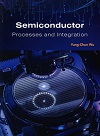 |
Semiconductor Processes and Integration+作者:
Yung-Chun Wu+年份:
2026 年1 版
+ISBN:
9786267533420
+書號:
EE0505PT
+規格:
平裝/單色
+頁數:
496
+出版商:
聖智學習
+參考資訊:


|
定價
$ |


|
本站購物功能已關閉,點選"購物車"圖示會自動連結到新的購書網頁!或與LINE客服諮詢聯繫
讀者購書請至★滄海書局‧鼎隆圖書購書網 ★https://eshop.tsanghai.com.tw/★
滄海ESHOP購書網提供更方便、快速訂購、結帳付款的購書服務,並提供數位產品購買專區~
書籍若有教學輔助配件,僅提供採用老師教學使用,是非賣品,不販售,亦無法提供一般讀者。

Semiconductor Processes and Integration is a comprehensive textbook thatsystematically covers the fundamental knowledge of semiconductor processing andintegration technologies. The book focuses on multiple generations of transistorarchitectures, including two-dimensional metal-oxide-semiconductor field-effecttransistors (MOSFETs ), three-dimensional fin field-effect transistors (FinFETs ), gateall-around field-effect transistors (GAAFETs ), and complementary field-effecttransistors (CFETs). This book is designed for university-level courses in"Semiconductor Processes" or "Semiconductor Process Technology" within scienceand engineering departments, professional development for semiconductor industrypractitioners, and as a technical reference for researchers and experts in related fields.
The content is organized to provide a progressive understanding of semiconductortechnology, beginning with foundational concepts and advancing to cutting-edgedevelopments. Chapters 1 through 3 establish the fundamental principles by exploringthe basic properties of semiconductor materials, starting from the crystal structure ofsilicon semiconductors and progressing through the physical concepts ofsemiconductor physics with comprehensive explanations of energy bands and analysisof basic semiconductor device operations. Chapters 4 through 9 systematicallyexamine the unit module processes essential to semiconductor integrated circuitfabrication, including oxidation and diffusion processes, photolithography processes,diffusion and ion implantation processes, etching processes, chemical vapor depositionand dielectric films, and metallization processes.
Building upon these foundational topics, the later chapters address processintegration technologies. Chapter 10 addresses process integration for 2D planartransistors, Chapter 11 covering advanced process technologies, and Chapter 12focusing on process integration techniques for 3D FinFETs. Chapter 13 delves intoadvanced semiconductor processes and key material analysis in components, whileChapter 14 concludes by examining future development trends in semiconductorprocessing technology.
This book provides comprehensive coverage of state-of-the-art semiconductortechnologies that have been implemented in mass production since 2010, includingstrained silicon channels, high-k dielectric gate oxide layers, metal gates, device gatedesign considerations, MOSFET carrier mobility, and advanced source and drainengineering. The process of integration technology for the latest mass-produced threedimensionalfin transistors is thoroughly explained through detailed text and illustrative diagrams. Recognizing that material characterization is an indispensableaspect of advanced semiconductor processing, the book includes practical applicationsof key analytical techniques such as scanning electron microscopy (SEM),transmission electron microscopy (TEM), X-ray spectroscopy, and Ramanspectroscopy.
Finally, it offers a comprehensive examination of anticipated semiconductorprocess technology developments, addressing critical topics such as FinFETs reachingtheir physical scaling boundaries, the emergence of GAAFETs as next-generationdevice architectures, CFETs for enhanced integration density, and the evolution of 3DIC heterogeneous integration.
Given the inherent complexity of semiconductor manufacturing processes andtechniques, this book takes a dual approach of comprehensive textual explanationscomplemented by over 500 illustrative figures and diagrams, enabling readers to graspintricate concepts with greater depth and clarity. The content of this book is groundedin two decades of practical teaching and research experience accumulated by ourresearch team at National Tsing Hua University in Taiwan, enriched by insights drawnfrom numerous classic textbooks and hundreds of scientific and technical papers in thefield. We would like to express our sincere gratitude to the members of our laboratoryresearch team for their invaluable assistance in the preparation of this book, to theindustry professionals and academic colleagues whose exchanges and discussionshave greatly enriched our understanding over the years, and to the students who havetaken our courses and provided valuable feedback that has helped shape this work.
For supplementary learning, Professor Yung-Chun Wu's 36-hour open course withEnglish subtitle on Semiconductor Engineering is freely available on YouTube (https://reurl.cc/Kd8pjp). The course can also be found by searching "SemiconductorEngineering" on the YouTube.
Given the rapid pace of advancement in semiconductor technology, inadvertentomissions or inaccuracies in this work are inevitable. We sincerely welcomeconstructive feedback, corrections, and suggestions from experts and readers alike,which may be submitted via email to ycwuess@gmail.com.

1.The text offers comprehensive coverage of state-of-the-art semiconductor technologies, including strained silicon channels, high-k dielectric gate oxide layers, metal gates, device gate design considerations, MOSFET carrier mobility, and advanced source and drain engineering.
2.The text provides a detailed explanation of process integration technologies for 2D planar transistors and 3D FinFETs.
3.The text provides the examples that clarify concepts and show how theory is applied.
4.With over 500 illustrations, it enables readers to grasp the complexity of semiconductor manufacturing processes and techniques with greater depth and clarity.
5.The book covers multiple generations of transistor architectures, including MOSFETs, FinFETs, GAAFETs, and CFETs.

Yung-Chun Wu earned his Ph.D. in Institute of Electronics from National Chiao Tung University in 2005. He serves in the Department of Engineering and System Science and the College of Semiconductor Research at National Tsing Hua University, Hsinchu, Taiwan. As an IEEE Senior Member, his research expertise spans semiconductor device fabrication and integration, semiconductor device physics and TCAD simulation, as well as memory process and integration. Professor Wu has published over 100 SCI-indexed journal articles, primarily in IEEE publications, and holds several U.S. patents. He authored 3D TCAD Simulation for CMOS Nanoelectronic Devices (Springer, 2017) and the Chinese textbook Semiconductor Processes and Integration (Tsang Hai, 2023).

1 Semiconductor Integrated Circuit Development
2 Basic Semiconductor Materials
3 Base Semiconductor Devices
4 Oxidation and Heating Processes
5 Lithography
6 Diffusion and Ion Implantation Process
7 Etching Process
8 Dielectric Films and Chemical Vapor Deposition
9 Metallization Process
10 CMOSFET Process Integration
11 Advanced Device Process
12 FinFET Process Integration
13 Semiconductor Materials Analysis Technology
14 GAAFET and CFET to 3D IC Heterogeneous Integration