

 |
 |
 |
 |
|||||||||||||||||||||||||||||||||||||||||||||||||||||||||||||||||||||||||||||||||||||||||||||||
 |
||||||||||||||||||||||||||||||||||||||||||||||||||||||||||||||||||||||||||||||||||||||||||||||||||
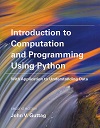 |
Introduction to Computation and Programming Using Python 2/e+作者:
Guttag+年份:
2016 年2 版
+ISBN:
9780262529624
+書號:
CS0403P
+規格:
平裝/單色
+頁數:
472
+出版商:
The MIT Press
+參考資訊:


|
定價
$ |


|
本站購物功能已關閉,點選"購物車"圖示會自動連結到新的購書網頁!或與LINE客服諮詢聯繫
讀者購書請至★滄海書局‧鼎隆圖書購書網 ★https://eshop.tsanghai.com.tw/★
滄海ESHOP購書網提供更方便、快速訂購、結帳付款的購書服務,並提供數位產品購買專區~
書籍若有教學輔助配件,僅提供採用老師教學使用,是非賣品,不販售,亦無法提供一般讀者。

This book introduces students with little or no prior programming experience to the art of computational problem solving using Python and various Python libraries, including PyLab. It provides students with skills that will enable them to make productive use of computational techniques, including some of the tools and techniques of data science for using computation to model and interpret data. The book is based on an MIT course (which became the most popular course offered through MIT’s OpenCourseWare) and was developed for use not only in a conventional classroom but in in a massive open online course (MOOC). This new edition has been updated for Python 3, reorganized to make it easier to use for courses that cover only a subset of the material, and offers additional material including five new chapters.
Students are introduced to Python and the basics of programming in the context of such computational concepts and techniques as exhaustive enumeration, bisection search, and efficient approximation algorithms. Although it covers such traditional topics as computational complexity and simple algorithms, the book focuses on a wide range of topics not found in most introductory texts, including information visualization, simulations to model randomness, computational techniques to understand data, and statistical techniques that inform (and misinform) as well as two related but relatively advanced topics: optimization problems and dynamic programming. This edition offers expanded material on statistics and machine learning and new chapters on Frequentist and Bayesian statistics.

John V. Guttag is the Dugald C. Jackson Professor of Computer Science and Electrical Engineering at MIT.

1 Getting Started
2 Introduction to Python
3 Some Simple Numerical Programs
4 Functions, Scoping, and Abstraction
5 Structured Types, Mutability, and Higher-Order Functions
6 Testing and Debugging
7 Exceptions and Assertions
8 Classes and Object-Oriented Programming
9 A Simplistic Introduction to Algorithmic Complexity
10 Some Simple Algorithms and Data Structures
11 Plotting and More About Classes
12 Knapsack and Graph Optimization Problems
13 Dynamic Programming
14 Random Walks and More About Data Visualization
15 Stochastic Programs, Probability, and Distributions
16 Monte Carlo Simulation
17 Sampling and Confidence Intervals
18 Understanding Experimental Data
19 Randomized Trials and Hypothesis Checking
20 Conditional Probability and Bayesian Statistics
21 Lies, Damned Lies, and Statistics
22 A Quick Look at Machine Learning
23 Clustering
24 Classification Methods